Going It Alone Is Costing American Founders More Than They Realize — Here's What Indian Partnership Networks Reveal
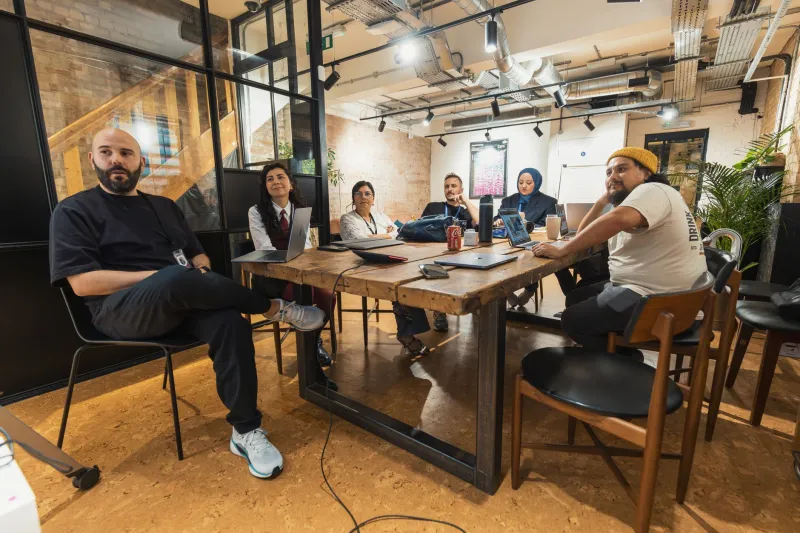
The Myth That Built Silicon Valley — And the Reality That Is Replacing It
For decades, American entrepreneurial culture has been shaped by a singular, seductive narrative: the visionary founder who bets everything on a bold idea, works in isolation, and emerges triumphant. From garage startups to billion-dollar unicorns, this mythology has been so thoroughly embedded in the national consciousness that departing from it can feel almost un-American.
But the data tells a different story.
According to the Bureau of Labor Statistics, approximately 20 percent of small businesses fail within their first year, and nearly half collapse before reaching the five-year mark. While factors such as undercapitalization and market timing certainly contribute, a growing body of research points to a less-discussed culprit: structural isolation. Founders who operate without consistent peer accountability structures make slower decisions, miss critical blind spots, and burn out at disproportionate rates.
This is precisely the problem that a concept deeply rooted in Indian intellectual and commercial tradition — the idea of the mitra, or trusted companion — is beginning to solve for American entrepreneurs willing to look beyond their borders for inspiration.
What Indian Business Networks Actually Look Like
The concept of mitra in Indian culture extends far beyond casual friendship. Rooted in Sanskrit, the word carries connotations of alliance, mutual obligation, and shared purpose. In practice, Indian business communities — from the tightly knit Marwari trading networks of Rajasthan to the collaborative professional circles common among Indian-American entrepreneurs in cities like San Jose, Houston, and Edison, New Jersey — have long operationalized this principle.
These networks function less like networking events and more like structured accountability ecosystems. Members share financial vulnerabilities, strategic challenges, and operational failures with a candor rarely seen in Western professional settings. The expectation of reciprocity is not informal; it is baked into the structure of the relationship.
Sunita Rao, co-founder of a Chicago-based SaaS firm serving mid-market retailers, describes her experience after joining a peer advisory circle modeled on this philosophy: "I had spent three years making every major decision alone. When I entered a structured partnership group with four other founders — two of whom had backgrounds in Indian business communities — the quality of my decision-making changed almost immediately. There was a kind of accountability I had never experienced before. Not judgment, but genuine investment in each other's outcomes."
Rao's company grew revenue by 34 percent in the 18 months following her entry into the group. She attributes a significant portion of that growth to the strategic input she received through regular peer sessions.
Why Accountability Partnerships Reduce Failure Rates
The mechanism behind peer-based advisory structures is not mysterious. When a founder knows that they will be reporting their decisions and outcomes to a group of trusted peers on a regular cadence, the quality of their planning improves. Cognitive biases that flourish in isolation — confirmation bias, optimism bias, and what behavioral economists call the planning fallacy — are consistently challenged by outside perspective.
A 2022 study published in the Journal of Business Venturing found that entrepreneurs who participated in structured peer advisory groups were 33 percent more likely to reach profitability milestones within their projected timelines than those who relied exclusively on solo reflection or occasional mentorship from a single advisor.
Marcus Ellison, a serial entrepreneur based in Atlanta who has launched three companies over the past decade, did not encounter the peer-accountability model until his second venture failed. "After that experience, I started studying what Indian-American founders in my city were doing differently. What I noticed was that they almost never operated alone at a strategic level. There was always a circle of people who knew the real numbers, the real challenges."
Ellison restructured his third venture around a formal peer advisory board of five founders from complementary industries. That company is now in its fourth year of operation and recently closed a Series A round.
The Structural Components American Founders Are Borrowing
Entrepreneurs who have adopted India-inspired partnership models in the US context tend to emphasize several specific structural elements that distinguish these arrangements from conventional networking or informal advisory relationships.
Regular cadence with structured agendas. Unlike casual coffee meetings, mitra-style peer groups meet on a fixed schedule — typically monthly or biweekly — with a predetermined framework for discussion. Each member presents a current challenge, receives structured feedback, and commits to specific actions before the next session.
Reciprocal vulnerability. The expectation is symmetrical. No member occupies a permanent advisory role; each participant both gives and receives. This removes the power imbalance that often undermines traditional mentorship relationships and creates genuine psychological safety.
Long-term commitment over transactional exchange. Indian business networks are notable for their durability. Relationships forged within them often span decades. American founders who have adopted this orientation report that the depth of insight they receive increases substantially over time as trust compounds.
Cross-industry perspective. Many of the most effective peer groups deliberately include founders from different sectors, mirroring the diverse composition of traditional Indian business networks where textile merchants, financiers, and traders historically collaborated within shared accountability frameworks.
What This Means for the American Startup Ecosystem
The implications of this shift extend beyond individual company outcomes. Accelerators, incubators, and business schools are beginning to take notice. Programs at institutions including the University of Michigan and the University of Texas at Austin have quietly introduced cohort-based accountability structures that borrow heavily from collaborative learning philosophies common in Indian educational and professional settings.
For founders still committed to the solo-operator model, the competitive landscape is growing less forgiving. Markets are more complex, capital is more scrutinized, and the cognitive demands of modern entrepreneurship exceed what any single individual can reliably manage alone.
The mitra model does not ask founders to surrender their vision or dilute their equity. It asks them to recognize that sustained excellence — in business as in any demanding discipline — is rarely achieved in isolation. The most rigorous preparation systems in the world, whether for India's competitive entrance examinations or for building a durable company, have always understood this.
The question for American entrepreneurs is no longer whether peer accountability works. The question is how quickly they are willing to adopt it.