Silicon Valley's Secret Hiring Edge: Why Collaborative Intelligence Now Outranks Individual Brilliance
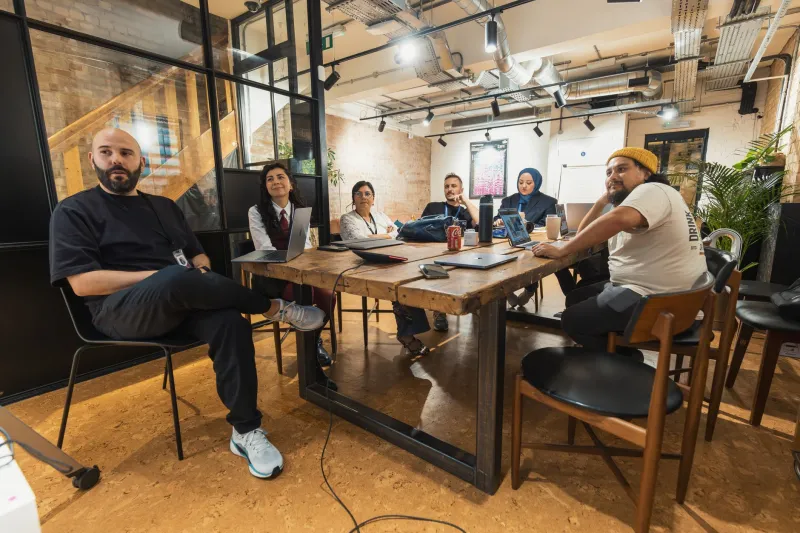
For decades, the American job market rewarded a familiar archetype: the lone genius. The candidate with the perfect GPA, the polished résumé, the individual accolades. But something significant has shifted inside the hiring rooms of Google, Goldman Sachs, and hundreds of growth-stage startups across the country. Recruiters are no longer simply asking, What have you achieved? They are increasingly asking, Who did you bring with you?
This emerging hiring philosophy — one that prioritizes what organizational psychologists are beginning to call "collaborative intelligence" — has a quiet but powerful parallel in a concept that Pratiyogita Mitra has championed from its founding: the idea of the mitra, or trusted partner in pursuit of shared success.
What Is Collaborative Intelligence, and Why Does It Matter Now?
Collaborative intelligence refers to a candidate's demonstrated capacity to solve complex problems within a network of peers, to share knowledge generously, and to actively raise the performance of those around them. It is distinct from teamwork in the conventional sense. Where teamwork implies coordination, collaborative intelligence implies elevation — the ability to make an entire group smarter and more capable.
A 2023 study published by Deloitte found that organizations prioritizing collaborative work structures were 5.5 times more likely to be high-performing than those built around individual contribution models. Meanwhile, LinkedIn's Global Talent Trends report identified "cross-functional collaboration" as one of the top five skills hiring managers across the United States now screen for explicitly during interviews.
Yet despite this clear demand signal, most traditional academic pathways — including elite MBA programs — continue to reward individual output over collective contribution. The result is a significant talent gap that forward-thinking companies are scrambling to fill.
The Mitra Principle in Practice
The Sanskrit word mitra translates not merely as "friend" but as a trusted companion in a shared endeavor — someone whose success is inseparable from yours. This principle sits at the heart of how millions of students in India prepare for the country's most grueling competitive examinations, from the IIT-JEE to the UPSC Civil Services exam.
In these preparation ecosystems, students routinely form tightly knit study circles in which the explicit goal is not just personal mastery but group mastery. A student who understands a difficult concept in organic chemistry is expected to teach it until every member of the circle understands it equally well. The teaching reinforces the teacher's own learning while building the group's collective capability — a dynamic that mirrors what the best engineering and consulting teams in America now actively seek.
"We interview hundreds of candidates every year," said one engineering director at a major Bay Area technology company, who asked not to be identified by name. "The ones who stand out aren't always the ones with the most impressive solo projects. They're the ones who can describe, in specific terms, how they helped someone else get unstuck. That's the skill that scales."
What Finance and Tech Executives Are Actually Screening For
The shift is visible across industries. In finance, firms like BlackRock and JPMorgan have quietly restructured portions of their interview processes to include scenario-based questions that probe a candidate's history of peer mentorship and knowledge transfer. In technology, companies including Salesforce and Atlassian have incorporated structured peer-review simulations into their final interview rounds.
A senior talent acquisition partner at a Fortune 100 software company described it plainly: "We can train technical skills. What we cannot train is the instinct to pull a struggling colleague alongside you rather than sprint ahead alone. That instinct either exists or it doesn't, and it tends to come from environments where collaborative accountability was the norm — not the exception."
This is precisely the environment that rigorous peer-learning systems — like those embedded in Indian competitive exam preparation culture — reliably produce. Students who have spent years preparing for high-stakes exams within accountability circles develop an almost reflexive orientation toward shared success. They learn to celebrate a peer's breakthrough as a data point for the group, not a threat to their own standing.
Why Traditional MBA Programs Are Missing the Mark
The irony is significant. Business schools across the United States invest enormous resources in teaching leadership, communication, and organizational behavior. Yet their core assessment structures — individual exams, graded curves, solo case analyses — continue to reward exactly the behaviors that modern employers are moving away from.
"The MBA teaches you to compete within a cohort," observed one management consultant and former IIT graduate now based in Chicago. "The study circle teaches you to compete as a cohort. Those are fundamentally different orientations, and the market is beginning to price that difference."
For American students navigating career preparation, this gap represents both a challenge and an opportunity. Those who deliberately seek out peer-learning environments — whether through formal mentorship programs, competitive exam preparation communities, or structured study groups — are building a competency that their peers who rely solely on classroom instruction are not.
Building Your Collaborative Intelligence Profile
For students and early-career professionals reading this, the practical implication is clear: your network is not merely a source of referrals. It is a portfolio of collaborative intelligence that sophisticated employers are learning to read.
Here are three concrete steps to begin developing and documenting that portfolio:
1. Join or build a structured peer accountability circle. Whether you are preparing for the GMAT, the bar exam, or a technical certification, form a group with a defined structure — rotating teaching responsibilities, shared goal-setting, and regular performance check-ins. Document your role and the group's collective outcomes.
2. Quantify your mentorship contributions. When a peer you coached improves their score, lands an internship, or masters a difficult concept, note it. These are not soft anecdotes — they are data points that demonstrate your capacity to elevate others, which is precisely what collaborative intelligence hiring frameworks are designed to surface.
3. Frame your experience accordingly in interviews. When asked about your greatest academic or professional achievements, resist the instinct to describe only individual wins. Describe the network context: who you worked alongside, what you contributed to the group, and how the collective outcome exceeded what any individual could have produced alone.
The Competitive Advantage You Are Not Yet Claiming
At Pratiyogita Mitra, our conviction has always been that the most powerful preparation for any high-stakes challenge — academic or professional — happens in community, not isolation. The emerging evidence from America's most competitive hiring environments affirms that conviction in concrete economic terms.
The students and professionals who understand this earliest will hold a genuine edge. Not because they have gamed a system, but because they have genuinely developed the one capacity that scales in every organization, at every level of seniority: the ability to make everyone around them better.
That is not a soft skill. That is the skill. And the hiring market is finally beginning to say so out loud.